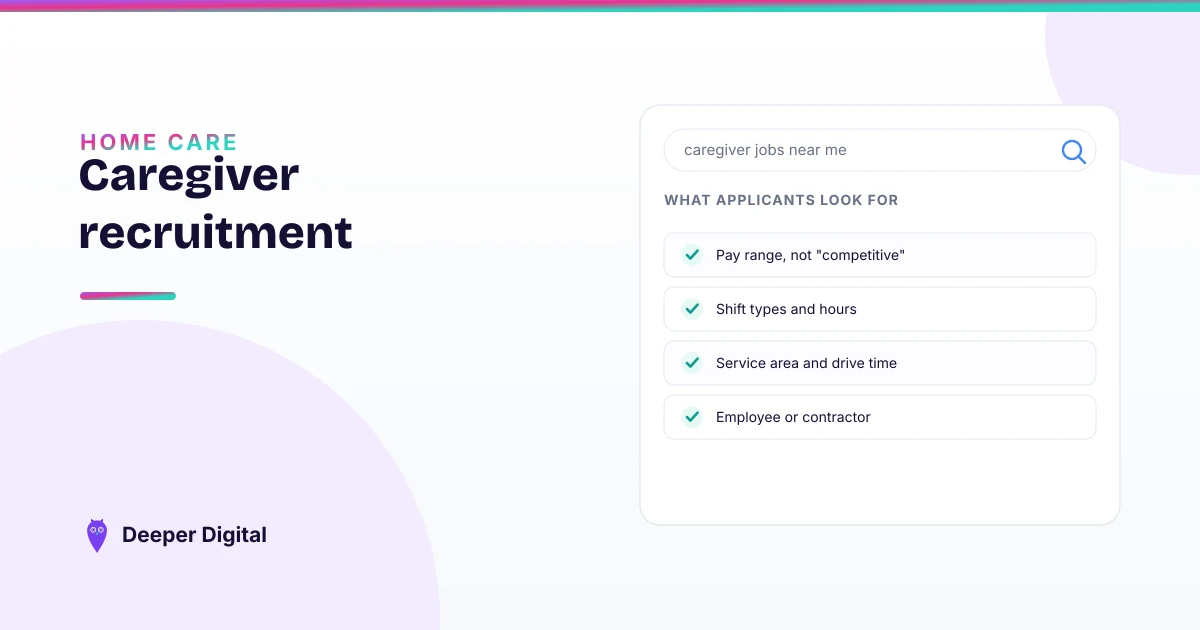
Caregiver recruitment marketing means being findable for the searches caregivers run — “caregiver jobs near me,” “CNA jobs [city]” — and that search is wide open.
Every home care agency has the same bottleneck, and it isn’t demand. It’s staff. You can win the family’s call and still lose the job because you can’t cover it — yet agencies spend their entire marketing budget on families, and almost none of it on the audience that actually limits growth.
Where do caregivers actually look?
On a phone, usually in the evening after a shift, typing the same shape of query a family does:
- “caregiver jobs near me”
- “home care jobs [city]”
- “CNA jobs near me”
- “caregiver agency hiring near me”
- “home health aide jobs [town]”
Then — and this is the part agencies miss — they check your Google Business Profile and read your reviews before applying. Not the family reviews. The ones from other caregivers. (The profile setup that both audiences see.)
Why does the profile matter for hiring?
Because it’s the same profile. You don’t get a separate one for recruitment.
If your reviews contain three complaints about late paychecks or last-minute schedule changes, every applicant reads them. An agency can be running a solid recruitment campaign and quietly losing candidates at the profile, without ever knowing why.
The fix isn’t to bury those reviews, which you can’t do anyway. It’s to reply to them like a professional — acknowledge, state what changed, move on — and to make sure satisfied caregivers are leaving reviews too. A profile where staff say the scheduling is fair does more recruiting than a job ad. (The review system that produces those.)
What should a careers page say?
The things caregivers search for and most agencies won’t put in writing:
- Pay range. Not “competitive.” A range. Listings without pay get skipped.
- Shift types and hours. Weekends, overnights, live-in, minimum hours.
- Service area. Caregivers filter hard on drive time.
- Employee or contractor. They know to ask; answer it before they do.
- How fast they can start. If onboarding takes three weeks, say so; if it takes three days, that’s a competitive advantage.
- What supervision looks like. The complaint behind most caregiver turnover is feeling unsupported.
“Join our compassionate team” competes badly against a job board listing that states the pay. (The rest of the site should be this specific too.)
Is this really a search problem?
Partly. Most agencies rely on job boards, which work but charge per posting and put you beside every competitor on an identical template. Ranking for “caregiver jobs [town]” organically is a channel that doesn’t invoice you monthly.
It’s also less contested than the family-facing search. Every agency in your metro is fighting over “home care near me.” Far fewer have a careers page that would rank for anything at all.
What about AI assistants?
Caregivers use them the same way families do — “what home care agencies are hiring in [city],” “which agency pays best for CNAs near me.” The assistant answers from whatever it can read. An agency with a specific careers page stating pay, area and shift types is quotable. One with a mission statement isn’t. (How assistants decide who to name.)
Google’s job posting structured data guidance covers the markup if you want listings eligible for the jobs experience.
Caregiver recruitment checklist
- Careers page stating pay range, shifts, area, and employment type
- Profile reviews from caregivers, not only families
- Every negative review replied to professionally
- Realistic onboarding time stated plainly
- Job posting markup where you list roles
- Consistent name, address and phone across everything (why)
The honest shortcut
The profile both audiences read — reviews, replies, weekly signs of life — is the monthly job. We run it for you, every week. The careers page is writing, so it’s quoted on its own. See done-for-you local SEO for home care, or grab a free game plan and we’ll show you what a caregiver finds tonight.
 NASP
NASP  Wild Foods Co.
  Noble Origins
  Cowboy Pools
  BT Biltong